Tuning Basics
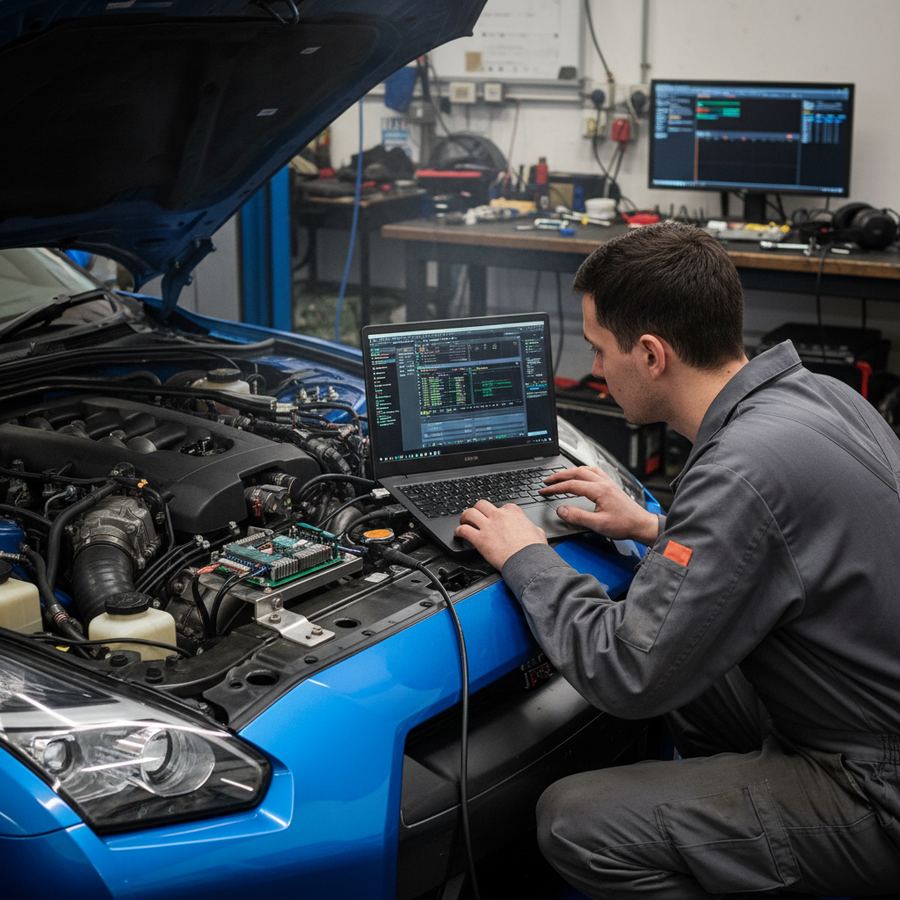
A tune is just a set of instructions that tells your engine how much fuel to inject, when to fire the spark plugs, and how much boost to run. Change those numbers and you change how the engine behaves. Get them right and you pick up power, throttle response, and efficiency. Get them wrong and you crack a ringland or melt a piston.
That is not meant to scare you. Tuning is one of the single best modifications you can do to a car. But understanding the basics helps you find a good tuner, ask the right questions, and recognize when something is off.
What a Tune Actually Changes
Modern engines run on fuel maps, ignition tables, and (on turbocharged cars) boost targets. The factory calibration is conservative. Engineers have to account for 91 octane fuel in Phoenix in July, altitude changes, and owners who never change their oil. There is room to work with.
A good tuner adjusts the fuel delivery to match your actual air/fuel ratio targets, advances timing where the engine can take it safely, and on boosted cars, raises or reshapes the boost curve. On naturally aspirated cars the gains are smaller but the throttle response improvement alone can make it feel like a different vehicle.
Key Tuning Parameters
Air/Fuel Ratio (AFR): How rich or lean the engine runs. Too lean under load causes detonation. Too rich wastes fuel and power.
Ignition Timing: When the spark fires relative to piston position. More advance means more power, up to the point where the engine knocks.
Boost Target: The pressure the turbo or supercharger pushes into the intake. More boost means more air, which means more fuel is needed to match.
OTS Maps vs. Custom Tunes
Off-the-shelf (OTS) maps from companies like Cobb or EcuTek are written for a specific combination of parts on a specific fuel grade. They are a huge step up from stock, but they are a compromise. They have to work on thousands of cars with slight differences in injector flow, turbo condition, and altitude.
A custom tune is written specifically for your car, your mods, and your fuel. The tuner watches the datalog and adjusts tables until everything is dialed. If you have a full bolt-on car or anything beyond basic intake and exhaust work, a custom tune is the way to go. It is not optional at that point.
What Makes a Tune Dangerous
Bad tunes kill engines. That is not an exaggeration. The two fastest ways to destroy a motor are running too lean under boost and running too much ignition advance for your fuel octane. Both cause detonation, which hammers the pistons with pressure spikes they were never designed to handle.
A good tuner builds in safety margins. They watch knock retard values, check fuel trims, and verify that the car is healthy before pushing further. A bad tuner just cranks the numbers and sends you on your way. The difference shows up at 4 AM on the highway when a connecting rod exits through the block.
Supporting Mods Matter
You cannot tune around hardware limitations. If your fuel pump cannot flow enough to support 400 horsepower, no amount of tuning wizardry will make it work safely. The same applies to intercoolers, injectors, and spark plugs. Before you get tuned, make sure your supporting modifications can handle the power level you are targeting.
This is where a lot of people get into trouble. They buy a big turbo kit and skip the fuel system upgrade because they ran out of budget. Then the tuner has to work with what is there, and the margins get thin.
Finding a Good Tuner
Ask for datalogs from previous customers with similar setups. A tuner who is proud of their work will show you clean logs with stable AFRs, no knock events, and smooth boost curves. Look for tuners who are active in your specific platform's community. A Subaru tuner and a BMW tuner might both be excellent, but their expertise is not interchangeable.
Remote tuning (e-tunes) works well if the tuner has experience with your platform and you are comfortable pulling datalogs. Dyno tuning is better for high-power builds where real-time adjustments under load are critical. Either way, the tuner's experience matters more than the method.
The SAE standards for engine calibration provide the engineering foundation behind all of this, though most street tuners work from experience and platform-specific knowledge rather than formal engineering specs.
Articles in This Section
- Detonation ExplainedWhat knock is, why it happens, and how it destroys engines from the inside out.
- EGT ExplainedExhaust gas temperatures and what they tell you about how your engine is running.
- Why Bad Tunes Kill EnginesReal examples of tuning failures and what went wrong in each case.
- Supporting Mods That MatterFuel pumps, intercoolers, and the hardware your tune depends on.