Brake Upgrades for Street Cars
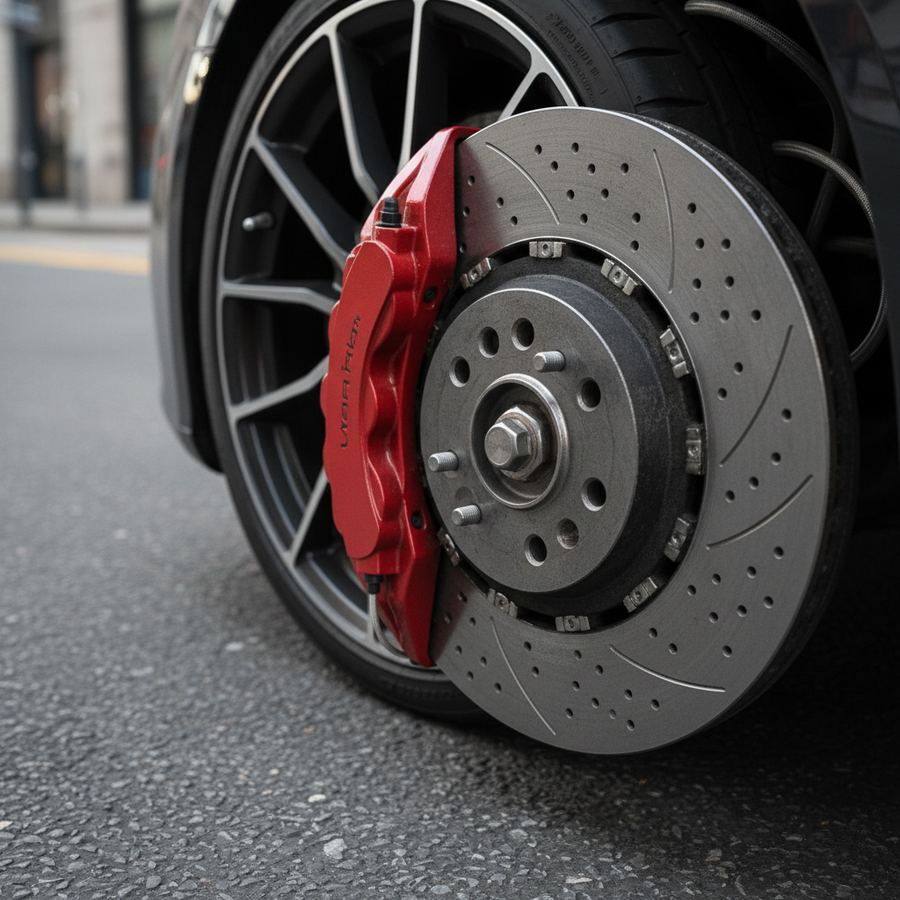
Brakes are the most important safety system on your car, and they are one of the most misunderstood upgrades in the street performance world. Most people think bigger calipers and slotted rotors are the answer to every braking problem. In reality, the factory brakes on most modern sport cars are more than capable of stopping the car from any speed. What fails is the brake pad compound and the fluid. Fix those two things and you fix 90% of street braking issues.
Why Stock Brakes Fade
Brake fade happens when the pads or fluid overheat. Factory brake pads are optimized for low noise, low dust, and consistent performance in mild conditions. Push them hard through a mountain road or repeated highway on-ramps and the pad compound heats past its effective range. Pedal feel goes soft, stopping distances increase, and you are one hard stop away from a very bad day.
Brake fluid absorbs moisture over time. As moisture content increases, the fluid's boiling point drops. When fluid boils, it creates gas bubbles in the brake lines, which compress instead of transferring hydraulic pressure. That is what a "spongy pedal under hard braking" actually is. The fix is simple: flush the fluid regularly and use a higher-spec fluid.
Brake Fluid Specs
DOT 3: Dry boiling point around 401 F. Fine for stock cars in normal use.
DOT 4: Dry boiling point around 446 F. Better for spirited street driving.
DOT 4 Racing / DOT 5.1: Dry boiling point 500 F+. For track days and aggressive street use. Motul RBF 600 and Castrol SRF are popular choices.
Flush brake fluid every two years at minimum. Annually if you drive hard.
Performance Pads for the Street
This is the single most effective brake upgrade for a street car. A quality street-performance pad like the EBC Yellowstuff, Hawk HPS, or StopTech Street Performance handles higher temperatures than factory pads while still working well when cold. That "works when cold" part matters. Full-race pads need to be warm before they grip properly, which is dangerous for street driving where your first stop of the day might be an emergency.
The trade-off with better pads is usually more dust and sometimes more noise. A pad that handles higher temperatures uses a more aggressive friction compound, and that compound deposits more residue on your wheels. If you care about keeping your wheels clean, factor that in. Ceramic compounds tend to dust less but often have lower peak friction than semi-metallic options.
Match your pad choice to your driving. If you are daily driving with occasional spirited runs through back roads, a street-performance pad is perfect. If you are doing track days, you need a dedicated track pad and should swap back to street pads for the drive home. Running track pads on the street is a recipe for poor cold-bite and squealing at every stoplight.
Rotors: Slotted, Drilled, or Plain
Plain (blank) rotors from a quality manufacturer like Centric or DBA are all most street cars need. They provide consistent braking surface, resist cracking better than drilled rotors, and cost less than slotted ones.
Slotted rotors help sweep away gas and debris from the pad surface, which improves bite under hard use. They wear pads slightly faster but provide more consistent pedal feel during extended hard braking. For a car that sees aggressive street driving and occasional track days, slotted rotors are a reasonable upgrade.
Cross-drilled rotors look good but are structurally weaker. The holes act as stress risers and can crack under hard thermal cycling. Most brake engineers will tell you they are a cosmetic choice for street cars, not a performance one. If you want drilled rotors for the look, buy quality ones with chamfered holes and accept that they may crack if you push them hard.
When to Upgrade Calipers
Big brake kits (BBKs) with larger calipers and rotors make sense when you have genuinely outgrown the factory system. If you have added significant power and are running sticky performance tires that allow higher cornering speeds, the increased thermal mass of a larger rotor helps manage heat over repeated hard stops.
But for most street cars under 400 horsepower, a pad and fluid upgrade on factory calipers is more than enough. Save the BBK budget for suspension or tuning. Those will improve your driving experience far more than calipers that look great behind your wheels but solve a problem you do not actually have.
For the engineering fundamentals of brake system design, SAE's publications on brake engineering cover thermal management and friction material science in detail.
Stainless Steel Brake Lines
Factory rubber brake lines expand slightly under high pressure, which reduces pedal firmness. Stainless steel braided lines resist expansion and give you a more consistent, firmer pedal feel. On a street car, the difference is subtle but noticeable. On a car that sees hard braking regularly, it is one of those small upgrades that contributes to overall confidence in the system. When you combine firm lines with good fluid and performance pads, the entire brake feel transforms compared to stock. That confidence shows up when you need to push a modified car reliably.
Articles in This Section
- Performance Pads for StreetComparing Hawk, EBC, StopTech, and other street-performance pad options.
- Brake Upgrades That MatterWhere to spend your brake budget for the biggest improvement in stopping.