Why Bad Tunes Kill Engines
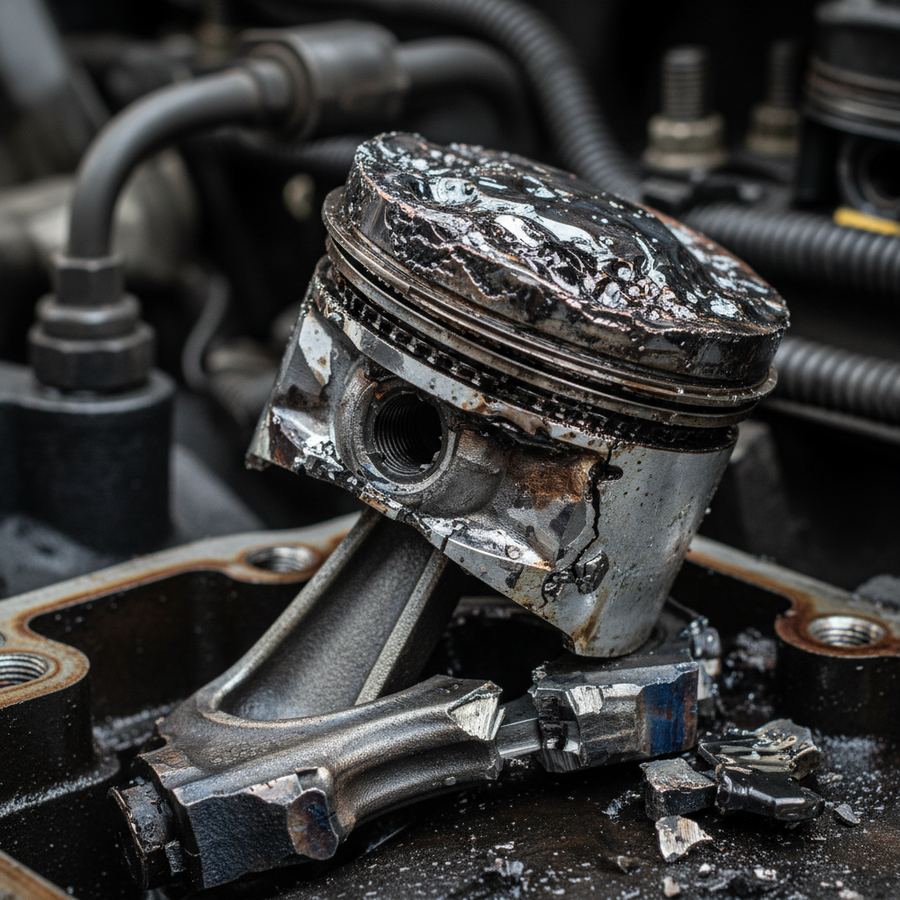
A bad tune is the most expensive modification you can put on a car. Not because the tune itself costs much, but because the engine replacement afterward costs a fortune. People spend $300 on a mail-order tune and then spend $8,000 rebuilding the engine six months later. This is not hypothetical. It happens constantly in every performance community, on every platform, and the pattern is always the same.
What a Bad Tune Actually Does
A tune modifies how much fuel the engine injects, when the spark plugs fire, how much boost the turbo builds, and dozens of other calibration values that the factory engineers spent years optimizing. When those values are wrong, the engine does not just lose power. It destroys itself.
Lean Conditions Under Load
This is the most common killer. A lean air-fuel ratio at full load means there is not enough fuel to properly cool combustion and resist detonation. On a turbocharged engine, the difference between a safe 11.5:1 AFR and a dangerous 12.8:1 AFR is tiny in terms of injector duty cycle but enormous in terms of what happens inside the cylinder.
A bad tuner might set the fuel tables for ideal conditions and never account for hot days, altitude changes, or fuel quality variation. The tune works fine on a 60-degree day with fresh 93 octane. On a 95-degree day with gas that has been sitting in the station's tank for two weeks, the same tune goes lean enough to cause sustained knock. After a few hard pulls, the piston crowns start showing heat damage. After a few more, you have a hole in a piston.
The really insidious part is that a slightly lean tune can survive for months before it kills the engine. Each event does a small amount of damage. The piston ring lands weaken, the coating erodes, blow-by increases, and eventually something gives. The owner thinks the tune was fine because the car ran for 10,000 miles. It was never fine. It was just dying slowly.
Over-Advanced Ignition Timing
More ignition advance makes more power, up to a point. Past that point, you are creating cylinder pressure that the engine was not designed to handle. A good tuner knows where that line is and stays well short of it on a street tune. A bad tuner chases the dyno number.
Over-advanced timing causes peak cylinder pressure to occur too early in the power stroke. This hammers the rod bearings, stresses the connecting rods, and dramatically increases the likelihood of detonation. The knock sensor will try to compensate by pulling timing, but if the base timing table is aggressive enough, the knock sensor is fighting a losing battle.
On platforms where the stock connecting rods are the weak link (which is most of them), over-advanced timing is how rods exit through the side of the block. The tuner gets a big dyno number, the customer drives home happy, and three months later there is a hole in the oil pan where a connecting rod used to be.
Removed Safety Margins
Factory tunes include safety margins for a reason. Speed-density fuel corrections, closed-loop knock response thresholds, torque management, rev limiters, and boost cut strategies all exist because engineers know that real-world conditions vary. A bad tuner sees these as restrictions to be removed.
Disabling torque management entirely means the drivetrain gets the full shock load of every shift and every throttle stab. Raising the rev limiter past the valve spring's safe operating range invites valve float. Turning off knock response means the ECU can no longer protect itself. Removing the speed limiter on a car with stock cooling means the transmission overheats on a highway pull.
Each of these changes might seem reasonable in isolation. Together, they remove every layer of protection between the driver's right foot and catastrophic failure.
The Real Cost of a Cheap Tune
Here is the math that nobody wants to hear. A proper custom tune from a reputable tuner on a modern turbocharged car costs $500-$1,000 for the tuning session, plus the cost of the tuning platform (HP Tuners, Cobb Accessport, etc.). A "budget" remote tune or a canned off-the-shelf map costs $200-$400.
An engine rebuild on a modern turbo four costs $5,000-$10,000. A built engine with forged internals is $8,000-$15,000. A complete replacement on a German turbo six is $12,000-$25,000 depending on the shop.
The $300 you saved on the tune is meaningless against those numbers. And that does not even account for the tow bill, the rental car, the lost time, and the sinking feeling of knowing you did it to yourself.
Red Flags: How to Spot a Bad Tuner
No datalogging required. If a tuner sends you a file and never asks to see a datalog, they are guessing. A tune that is not validated with real log data from your car is a gamble. Every engine is slightly different. Injector flow rates vary. Fuel pumps age. Sensors drift. A tuner who does not want to see your data is a tuner who does not care if the tune is actually safe on your car.
One file fits all. If the same tune file goes on every car regardless of mileage, modifications, altitude, or fuel availability, it is not a tune. It is a template. Templates work on average, which means they are wrong for everyone.
Chasing peak numbers. A tuner who advertises "500 WHP on stock turbo!" is telling you where their priorities are. Peak power on a dyno run is a terrible indicator of tune quality. A good tune makes consistent, safe power across the entire RPM range under all conditions. The dyno number is the least important metric.
No discussion of supporting modifications. If a tuner agrees to put 400 WHP through a stock fuel system, stock intercooler, and stock clutch without mentioning any of those as concerns, they are either incompetent or they do not care what happens to your car after they get paid.
No revisions policy. Conditions change. Fuel formulations change. If your tuner flashes a file and disappears, you are on your own when problems show up. A good tuner expects to do revisions and includes them in their service.
What Good Tuning Looks Like
A good tuner asks questions before they start. What fuel do you run? What modifications are on the car? What is the car used for? What is your altitude? Is the car a daily driver or a track toy?
They build in margins. The timing table is not set to the ragged edge of knock. The AFR targets are slightly rich of optimal for safety. The boost targets account for heat soak. The tune is designed to be safe on the worst day you will ever drive it, not just on the perfect day when they put it on the dyno.
They ask for datalogs. They want to see knock retard, AFR, boost, and timing data from real driving. They review the logs and make adjustments. They tell you what to watch for and when to come back for a revision.
They tell you no when appropriate. A tuner who refuses to put a 400 HP tune on a car with a stock fuel system is not being difficult. They are being professional. They know that the tune might work on the dyno and kill the engine on the street, and they do not want their name on that failure.
Protect Your Investment
Your engine is the most expensive component on your car. Treating the calibration that controls it as a commodity purchase is a decision you will eventually regret. Find a tuner with a reputation, a track record, and a willingness to do the work right. Pay them what they are worth. And then log your car regularly to make sure everything stays where it should be.
A good tune is the best money you will ever spend on your car. A bad tune is the worst. There is very little middle ground.