What Knock Retard Means in Your Datalog
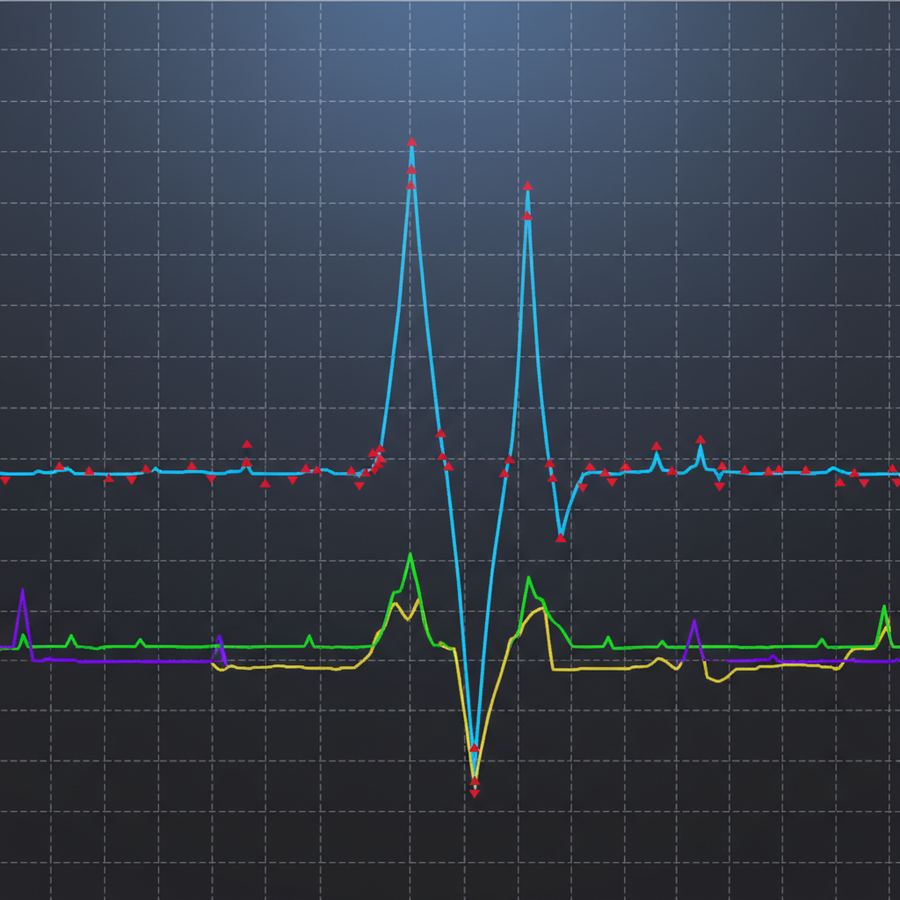
Knock retard is the single most misunderstood value in a datalog. New tuners see any amount of it and assume the engine is about to explode. Experienced tuners sometimes ignore too much of it and regret it later. The reality is somewhere in the middle. Knock retard is information, and knowing how to read it correctly is fundamental to evaluating whether your tune, fuel, and engine are healthy.
What Knock Retard Is
When the ECU's knock detection system identifies a vibration signature consistent with detonation, it responds by pulling (retarding) ignition timing. This is knock retard. It is a reactive safety measure. The ECU heard something it did not like, so it is reducing the timing advance to lower cylinder pressure and move away from the knock threshold.
On most platforms, knock retard is reported in degrees of crankshaft rotation. A value of 2.0 degrees means the ECU has pulled 2 degrees of timing from the commanded value. The actual timing the engine is running equals the commanded timing minus the knock retard.
Different platforms handle this differently in the datalog. GM vehicles typically show "Knock Retard" as a direct value per cylinder. Subaru shows "Feedback Knock Correction" (short-term response) and "Fine Knock Learning" (longer-term adaptation). Ford shows "Ignition Correction Cylinder" values. BMW uses "Ignition Angle Correction." The names vary but the concept is the same: the ECU is pulling timing because it detected knock.
Some Knock Retard Is Normal
This is the part that new dataloggers need to understand. On many platforms, occasional light knock retard during normal operation is completely normal and not cause for concern.
Knock sensors are sensitive. They are designed to detect the specific vibration frequencies associated with detonation, but the engine is a noisy environment. Injector firing, valvetrain operation, accessory belt vibration, and even road surface irregularities can sometimes produce vibrations in the knock frequency range. The ECU cannot always distinguish between real knock and mechanical noise, so it errs on the side of caution and pulls a small amount of timing.
On GM LS/LT engines, seeing 1.4 degrees of retard on a single cylinder during a pull is unremarkable. It is the knock detection system doing its job conservatively. On Subaru EJ/FA engines, feedback knock correction of -1.41 degrees (one count) that appears briefly and recovers immediately is considered noise on most tunes.
The key word is "occasional." A single blip of light retard that recovers within a fraction of a second is background noise. The same value appearing consistently on every pull, on the same cylinder, at the same RPM, is a pattern that means something.
When Knock Retard Is a Problem
Here is how to separate noise from real knock events in your logs:
Magnitude. Light retard (1-2 degrees on most platforms) that appears briefly is generally noise. Retard above 3-4 degrees is almost always real knock. At 5+ degrees, the engine is actively fighting detonation and you should stop doing full-throttle pulls until the cause is identified.
Duration. A single sample (one data point) of retard that immediately returns to zero is noise. Retard that stays elevated for several consecutive samples (half a second or more) is real. Retard that persists for the entire duration of a pull is an emergency.
Consistency. Noise is random. It appears on different cylinders at different RPM points and different load levels from pull to pull. Real knock is consistent. It shows up on the same cylinder, at the same RPM range, on every pull. If cylinder 3 is showing 3 degrees of retard at 5,500 RPM on three consecutive pulls, that is not noise.
Progression. Watch what happens across multiple pulls. If knock retard is 1 degree on pull one, 2 degrees on pull two, and 3 degrees on pull three, the problem is getting worse as the engine heats up. This pattern is classic for heat soak, marginal fueling, or a cooling system that cannot keep up.
Knock learn / long-term adaptation. On platforms that have a learning value (Subaru's Fine Knock Learning, GM's Knock Retard Learn), watch whether the learning value is trending negative over time. This means the ECU has seen enough knock events that it is permanently pulling timing in that cell. When knock learning starts accumulating, the tune needs attention.
What Knock Retard Tells You
Knock retard is a symptom. The log tells you it is happening, but you need to correlate it with other parameters to understand why.
Knock retard + lean AFR = fuel delivery problem. If you see retard coinciding with AFR going lean of the commanded target, the engine is knocking because it does not have enough fuel. This could be a fuel pump losing pressure at high RPM, an injector that is maxed out, or a fuel system that is undersized for the power level.
Knock retard + high intake air temps = heat soak. If retard appears or increases when intake temps climb above 120-130F, the intercooler is not keeping up. The hot intake air is pushing the engine closer to the knock threshold. This is especially common on back-to-back pulls.
Knock retard on one cylinder only = hardware issue. If one cylinder consistently shows more retard than the others, that cylinder has a problem. Could be a fouling spark plug, a leaking injector, carbon buildup, or even a head gasket issue affecting that cylinder's compression. This is not a tune problem. This is a mechanical problem.
Knock retard that appeared after a fuel stop = bad fuel. If your logs were clean last week and now show retard after you filled up at a different station, the fuel quality is the most likely culprit. Some stations consistently sell fuel with lower actual octane than advertised. Some areas get seasonal reformulations that change knock resistance.
Knock retard across all cylinders at high RPM = timing too aggressive. If every cylinder is showing similar retard at the same RPM range, the tune is likely asking for more timing than the engine can tolerate at that operating point. This is a calibration issue that your tuner needs to address.
What to Do When You See It
Step one: do not panic. Pull two or three more logs under the same conditions to confirm the pattern. If it is a single occurrence on a single pull, it may be an anomaly.
Step two: check the basics. What fuel are you running? When did you last fill up? What are the ambient conditions? Is the coolant temp normal? Are the intake air temps reasonable? Eliminate the simple explanations first.
Step three: send the logs to your tuner. Include the relevant context (fuel, conditions, recent changes). A good tuner can look at a log and tell you within minutes whether it is noise, a tune calibration issue, a fuel quality issue, or a hardware concern. This is what datalogging is for.
Step four: if knock retard is severe (4+ degrees sustained, or progressing worse with each pull), stop doing wide-open throttle pulls. Drive the car gently and get it looked at. Severe knock will damage the engine quickly if you keep loading it.
Platform-Specific Notes
GM (LS/LT): Watch "KR" (knock retard) per cylinder. Values up to 1.4 are generally noise. The "Knock Retard Learn" value is the long-term adaptation. If it is accumulating below -2 in any cell, the tune needs adjustment in that area.
Subaru (EJ/FA): "Feedback Knock Correction" is the immediate response. "Fine Knock Learning" (FKL) is the learned value. FKL trending to -2.81 or lower in any cell is concerning. DAM (Dynamic Advance Multiplier) dropping below 1.0 (or 16 on older scaling) indicates the ECU has seen enough knock to globally reduce timing. A DAM drop is serious.
Ford (EcoBoost): "OAR" (Octane Adjust Ratio) is the long-term knock adaptation. It should stay at 1.0 or very close. Dropping below 0.95 means the ECU is consistently fighting knock. Individual cylinder knock counts that accumulate rapidly are also a red flag.
Every platform is different, but the core principle is the same. Log it, understand the baseline, watch for deviations, and act on the data before the engine acts on the knock. That is the whole game.
If you are still learning to read logs, pair this with our datalogging overview and you will have the foundation to keep your tune safe for the long term.