Suspension Parts That Actually Improve Handling
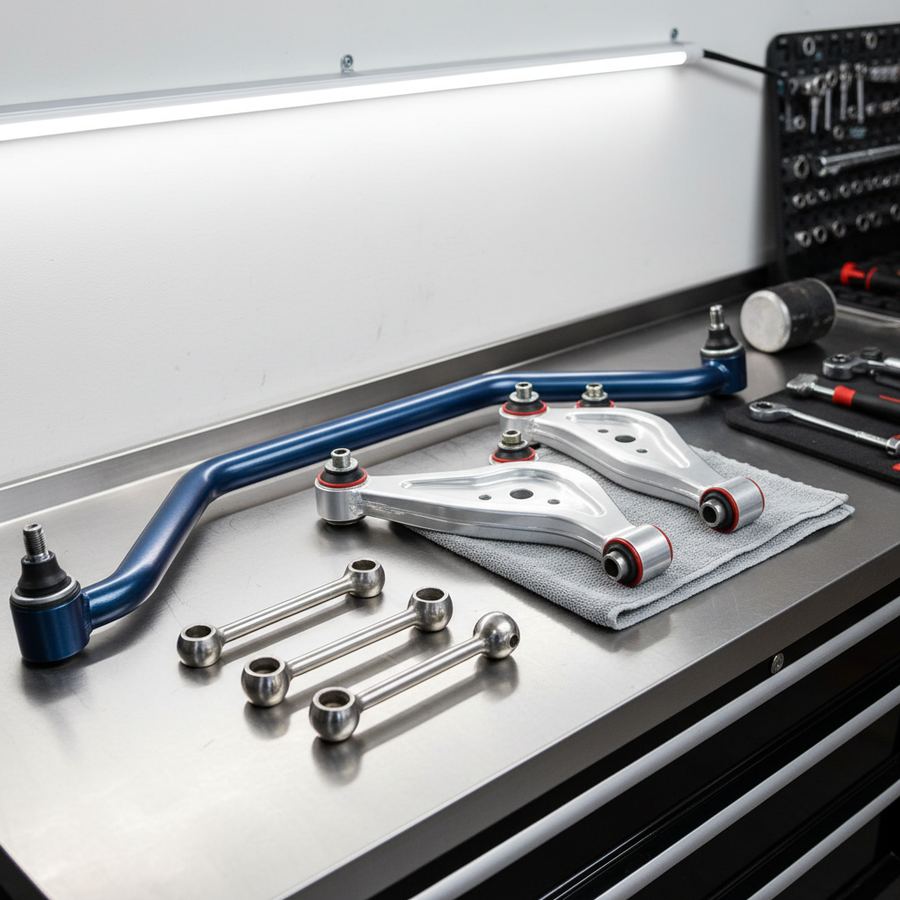
The suspension aftermarket is full of parts that promise better handling. Some of them deliver. Others look good in photos and do almost nothing once installed. If you are building a street car that actually handles well, knowing the difference between effective upgrades and cosmetic ones saves you hundreds of dollars and keeps your build focused on parts that make the car faster and more predictable through corners.
Sway Bars: The Best Bang for the Dollar
If you can only buy one suspension upgrade, buy a sway bar. Specifically a rear sway bar, or a matched front and rear set from the same manufacturer. Sway bars control body roll during cornering without affecting the ride quality over bumps. That is the rare combination in suspension tuning: more cornering grip with no penalty on straight-line comfort.
A sway bar works by connecting the left and right suspension through a torsion bar. When the car rolls in a corner, one side compresses and the other extends. The sway bar resists this differential movement by twisting, which transfers load to the inside tire and reduces the total roll angle. Less body roll means flatter cornering, more consistent tire contact patches, and better feedback through the steering.
On most front-wheel-drive and all-wheel-drive platforms, the factory rear sway bar is either small or nonexistent. Adding or upgrading the rear sway bar reduces understeer by shifting the roll balance toward the rear. The car rotates more willingly into corners, the front tires scrub less, and the overall handling balance improves dramatically. This single change can transform a nose-heavy car that plows through corners into one that feels neutral and responsive.
For rear-wheel-drive cars, a balanced upgrade of both front and rear sway bars is typical. Going too aggressive on the rear bar alone can induce oversteer, which is fun in a parking lot and dangerous on the street. A matched set maintains balance while reducing overall roll.
Sway bar diameter matters, but more is not always better. Going too stiff on a street car lifts the inside tire during aggressive cornering, which reduces total grip. For street use, a 20 to 30% increase in bar rate over stock is usually the sweet spot. Adjustable sway bars with multiple mounting holes let you fine-tune this balance after installation.
End Links: Small Part, Real Impact
End links connect the sway bar to the suspension at each corner. Factory end links use rubber bushings and stamped steel construction. They flex under load, which softens the sway bar's effect and introduces slop in the connection. Aftermarket end links with spherical bearings or polyurethane bushings eliminate that flex.
The improvement is subtle but real. The sway bar engages immediately when the car starts to roll instead of deflecting through the soft end link first. Turn-in feels more immediate, and the car changes direction with less body roll delay. On a car with an upgraded sway bar, good end links are essential because the increased bar rate puts more load through the end link. A stock rubber end link on an aftermarket sway bar will wear out quickly and develop clunking sounds within a year.
Adjustable-length end links are especially useful on lowered cars. Lowering changes the geometry between the sway bar and the suspension, which can preload the bar when the car is sitting still. This creates a ride height discrepancy and puts unnecessary stress on the end link. Adjustable end links let you set the correct length so the bar sits neutral at your lowered ride height. This is a small detail that makes a real difference in how the bar works and how long the end links last.
Control Arms: Geometry Correction
On a stock-height car, the factory control arms are fine. The geometry is correct, the bushings are adequate, and there is nothing to improve. On a lowered car, the story changes.
Lowering the car changes the angle of the control arms, which shifts the roll centre, changes camber, and can introduce bump steer. Aftermarket adjustable control arms correct these issues by allowing you to set the proper geometry at your lowered ride height.
Rear adjustable lower control arms (often called camber arms) are the most common upgrade on lowered cars. They let you dial in the rear camber to a street-friendly number instead of accepting whatever the lowered geometry gives you. On multilink rear suspensions, adjustable rear toe arms are equally important because lowering often introduces rear toe-out, which causes oversteer and rapid inner tire wear.
Front adjustable control arms are less common on street cars because most front camber correction is handled through camber bolts or adjustable strut top mounts. But on some platforms, particularly those with double-wishbone front suspension, adjustable front upper control arms provide finer camber control than bolts alone.
The key with control arms is that they are a geometry correction tool, not a grip enhancement tool. Installing them on a stock-height car does nothing. Installing them on a lowered car and then getting a proper alignment is what makes the difference. The control arm is a means to an alignment end.
Strut Mounts and Camber Plates
On MacPherson strut cars, the strut mount at the top of the strut tower is a significant compliance point. Factory mounts use rubber to isolate road noise and vibration from the chassis. This rubber flexes under cornering load, which allows the strut to deflect and the camber to change unpredictably during hard driving.
Aftermarket adjustable camber plates replace the factory mount with a solid or semi-solid mount that eliminates that compliance. They also provide camber adjustment range, which is essential on lowered strut cars where the stock adjustment is insufficient.
The tradeoff is noise and harshness. Solid mounts transmit more road noise into the cabin. Every bump, expansion joint, and rough patch is more audible. On a purpose-built track car, this is irrelevant. On a daily driver, it can make the commute unpleasant. Semi-solid mounts with small rubber inserts split the difference, providing most of the camber adjustment and reduced compliance with a moderate increase in noise rather than a dramatic one.
If your car is lowered 25 to 35 mm and the camber is within -1.5 degrees using stock hardware, you probably do not need camber plates. If the car is dropped 40 mm or more and the camber is pushing beyond -2.0 degrees with no way to correct it, camber plates become necessary. This is a case where the part serves a functional need on your specific setup, not a universal upgrade that every car benefits from.
Bushings: Polyurethane vs Rubber
Every suspension pivot point uses a bushing to allow controlled movement while isolating noise and vibration. Factory bushings are rubber. They are soft, quiet, and designed for comfort. They also deflect under load, which introduces vagueness in the suspension response.
Polyurethane bushings are harder and deflect less. Replacing the factory rubber bushings with polyurethane sharpens the steering response, makes the car feel more connected to the road, and reduces the compliance that allows the suspension to wander under hard cornering. The car feels tighter and more precise.
The cost is noise and harshness. Polyurethane transmits more vibration and road noise than rubber. On a car with an already stiff suspension, the additional harshness from poly bushings can make the ride uncomfortable. They also squeak if not properly lubricated during installation, and they require periodic re-greasing to stay quiet.
Full polyurethane bushing kits that replace every bushing on the car are popular but excessive for street use. The biggest gains come from replacing the bushings at the highest-stress pivot points: lower control arm rear bushings, subframe bushings, and trailing arm bushings. These locations see the most deflection during cornering and braking. Replacing every bushing, including the ones in low-stress locations, adds harshness without proportional handling gains.
A targeted approach works best for street cars. Replace the bushings at the three or four most critical locations, keep the factory rubber at the rest, and the car will feel significantly sharper without becoming unlivable. If you have already installed coilovers or lowering springs, stiffer bushings at the main control arm pivots complement the suspension upgrade by ensuring the geometry stays consistent under load.
Strut Tower Braces: Mostly Cosmetic on Most Cars
This is the part that generates the most debate and delivers the least measurable improvement on most platforms. A strut tower brace connects the two front strut towers with a rigid bar, the idea being that it prevents the towers from flexing during cornering and keeps the geometry more consistent.
On some older or less rigid chassis designs, strut tower braces make a noticeable difference. Older Miatas, older Civics, and other lightweight cars with relatively flexible unibodies can benefit from the added rigidity. The car feels more precise and the front end responds more predictably.
On most modern cars, the chassis is already stiff enough that a strut tower brace adds no measurable improvement. Modern unibody designs with extensive spot welding, structural adhesive, and engineered crumple zones are rigid enough that the strut towers do not flex enough under street driving loads to affect handling. Bolting a bar between them looks good when you open the hood, but the car drives the same.
The exception is convertibles. Cutting the roof off any car significantly reduces torsional rigidity. On a convertible, a strut tower brace and potentially other chassis bracing (tunnel braces, rear tower braces, subframe braces) can make a measurable improvement in handling precision. If your car still has a roof, the money is better spent on sway bars, bushings, or better tires.
What to Buy First
If you are building a handling-focused street car, here is the order that gives you the most improvement per dollar spent:
First: Tires. The tire is the single most important handling component. A good set of performance tires in the right width and compound transforms the car more than any bolt-on suspension part. Do this before anything else.
Second: Sway bar (rear, or matched set). The biggest handling transformation for the money. Reduces body roll, improves turn-in, and changes the handling balance without affecting ride quality.
Third: Proper end links. If you upgraded the sway bar, upgrade the end links to match. If you lowered the car, adjustable end links correct the geometry.
Fourth: Springs or coilovers with alignment. Lower the car if you want to, but do it right. Include the alignment in the budget and, if necessary, the camber correction hardware to keep the geometry in a street-friendly range.
Fifth: Targeted bushing replacement. Control arm bushings and subframe bushings at the main pivot points. Skip the full kit unless you are building a dedicated track car.
Last: Chassis bracing. Only if the platform actually needs it. Check forums specific to your car. If owners with strut tower braces cannot describe a noticeable difference, the car does not need one.
Every part in this list works with the others. A sway bar works better on good tires. Good tires work better with a proper alignment. A proper alignment requires correct geometry, which may require adjustable arms or mounts. Build the system, not a parts list, and the car will reward you with handling that actually improves with every addition rather than just looking modified.