Why Bad Alignment Kills Expensive Tires
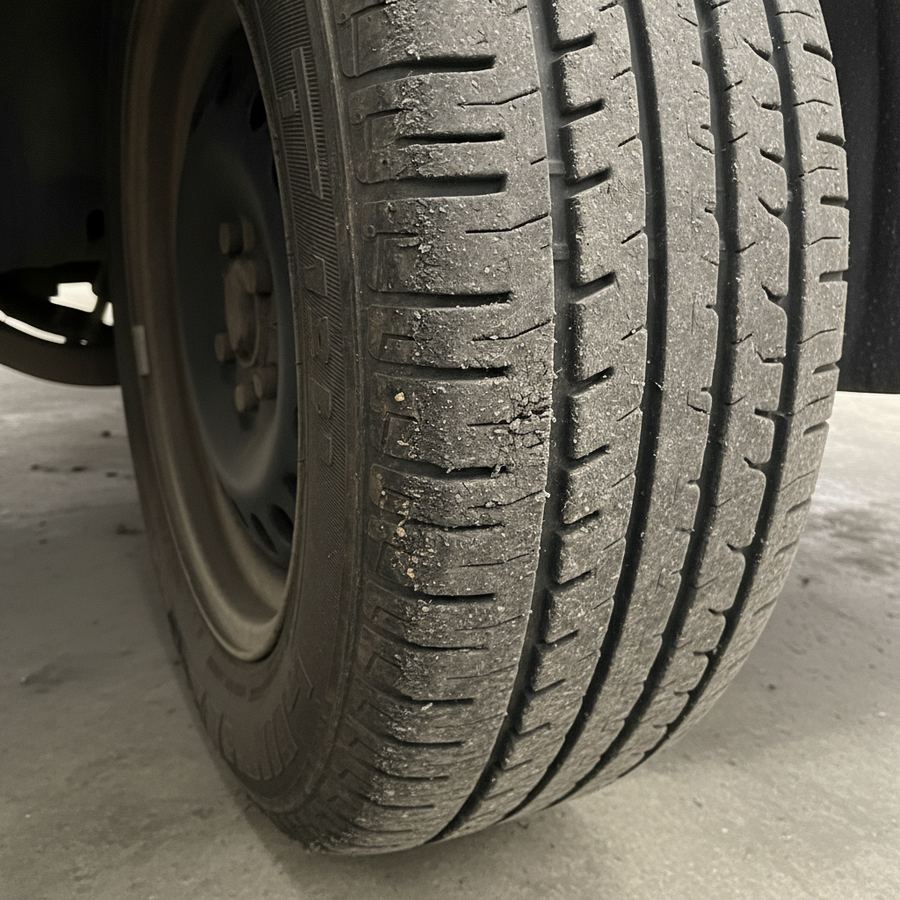
You just spent $1,000 on a set of performance tires. They should last 30,000 km. Instead, the inner edges are bald at 12,000 km while the outer edges still look new. The tire is not defective. Your alignment is wrong, and it has been silently destroying your investment from the first kilometre.
Bad alignment is the single most common reason performance tires die early on modified cars. It is also the most preventable. Understanding what goes wrong and why can save you hundreds of dollars a year in premature tire replacement.
What Alignment Actually Controls
Wheel alignment is the relationship between your wheels and the road surface, defined by three angles: camber, toe, and caster. Each one affects tire wear in a different and predictable way.
Camber is the inward or outward tilt of the wheel when viewed from the front of the car. Negative camber means the top of the wheel tilts inward. Positive camber means the top tilts outward. On a performance car, a small amount of negative camber improves cornering grip because it keeps the tire's contact patch flat against the road during weight transfer. Too much negative camber eats the inner edge of the tire during straight-line driving because the tire is not sitting flat on the road surface.
Toe is whether the wheels point inward or outward relative to each other when viewed from above. Toe-in means the fronts of the wheels point toward each other. Toe-out means they point away. Toe is the most aggressive tire-killing alignment angle. Even 2 mm of excess toe in either direction creates a scrubbing action that drags the tire sideways across the pavement with every metre of forward travel. This produces feathered wear, a sawtooth pattern across the tread that you can feel by running your hand across the tire surface.
Caster is the angle of the steering axis when viewed from the side of the car. More caster improves straight-line stability and steering feel. It also introduces camber change during cornering, which is generally beneficial. Caster itself does not directly wear tires the way camber and toe do, but incorrect caster can cause the car to pull to one side, which leads to compensating steering input and uneven wear over time.
How Lowering Destroys Your Alignment
Every car is designed with specific suspension geometry in mind. The control arms, tie rods, and struts are positioned to produce correct alignment angles at the factory ride height. When you lower the car, you change the relationship between all of those components.
On a MacPherson strut car, which covers most front-wheel-drive and many all-wheel-drive platforms, lowering the car increases negative camber. The strut angle changes as the knuckle moves upward relative to the body. A 40 mm drop on a typical strut car adds roughly 0.8 to 1.5 degrees of negative camber depending on the geometry. That might not sound like much, but it is enough to move the contact patch inward and start chewing the inner edge of the tire within a few thousand kilometres.
Lowering also changes toe. As the car drops, the tie rods and control arms operate at different angles, which can push or pull the wheels in or out. The change is usually small, but toe is so sensitive to tire wear that even a couple of millimetres makes a measurable difference over 10,000 km.
On multilink and double-wishbone rear suspensions, the effect can be even more pronounced. Lowering compresses the rear geometry and often introduces excessive negative camber and toe-out, both of which destroy rear tires from the inside out. This is why so many lowered cars eat rear tires. The rear alignment was never corrected after the drop.
Camber Wear: The Inside Edge Problem
Excessive negative camber is the most visible alignment wear pattern on modified cars. You will see the inner 20% of the tread worn smooth while the outer 80% still has full tread depth. The tire looks like it should last another 20,000 km on the outside, but it is already unsafe on the inside.
On a street car, anything beyond -1.5 degrees of negative camber on the front will start producing noticeable inner edge wear. Beyond -2.0 degrees, the wear becomes aggressive. Some lowered cars run -2.5 to -3.0 degrees because the stock strut does not have enough camber adjustment range to bring it back. Without adjustable camber plates or camber bolts, you are stuck with whatever the lowered geometry gives you.
This is one of the reasons cheap lowering springs can be worse than good coilovers for tire wear. Springs that drop the car 50 mm without providing any camber correction guarantee excessive negative camber. Coilovers with adjustable top mounts or pillow ball mounts give you the ability to dial the camber back to a reasonable number.
If your front camber is beyond -1.8 degrees and you cannot adjust it with the existing hardware, aftermarket camber bolts or adjustable upper mounts are not optional upgrades. They are required to stop destroying your tires.
Toe Wear: The Silent Killer
Toe wear is harder to see than camber wear but equally destructive. Excess toe scrubs the tire sideways against the pavement with every revolution. The wear pattern is a feathered or sawtoothed texture across the tread face. Run your hand across the tire in one direction and it feels smooth. Run it the other way and you feel the raised edges of each tread block catching your fingers. That is toe wear.
Toe-out on the front wears the inner edges and makes the car feel nervous and darty. Toe-in on the front wears the outer edges and makes the steering feel sluggish. On the rear, toe-out is especially dangerous because it causes oversteer tendency and eats the inner edges of both rear tires.
The tolerance for toe is tight. Most performance cars specify total front toe within a range of 0 to 2 mm. Even 3 mm of total toe-out will produce visible wear within 8,000 km. On a soft-compound performance tire, the wear happens even faster because the rubber is more susceptible to scrubbing forces.
Toe changes every time you hit a pothole hard enough to bend a tie rod or shift a subframe. It changes when you install new control arms or tie rod ends. It changes when you lower the car. Checking toe should be the first thing you do if you notice uneven wear or the steering wheel is off-centre.
The Cost of Ignoring Alignment
Here is the math that makes this real. A set of performance tires in 245/40R18 costs roughly $800 to $1,200. Properly aligned, they should last 30,000 to 40,000 km. With 2 degrees of excess negative camber and 3 mm of toe-out, those same tires will be worn out at 12,000 to 15,000 km. You just burned $800 in half the expected distance.
A proper four-wheel alignment costs $100 to $200. Even if you need aftermarket camber hardware, the total is $300 to $500 for parts and alignment combined. That investment protects $800 to $1,200 worth of tires. It is one of the best return-on-investment modifications you can make on a car that wears tires aggressively.
If you have lowered your car and have not had it aligned, you are currently spending money on tire wear you cannot see yet. By the time you notice the inside edges are bald, you have already lost thousands of kilometres of tread life that a $150 alignment would have saved.
What a Good Performance Alignment Looks Like
A good alignment for a lowered street car is not the same as the factory spec. The factory numbers assume stock ride height and prioritize tire life and steering feel for the average driver. A lowered car needs adjusted targets.
For most lowered street cars, a reasonable starting point is:
Front camber: -1.0 to -1.5 degrees. Enough to improve cornering grip without destroying the inner edge. If you cannot reach this range because the car is too low, you need camber correction hardware.
Front toe: 0 to 1 mm total toe-in. This stabilizes the steering without creating scrubbing wear. Toe-out on the front makes the car feel pointy but eats tires and can make highway driving tiring.
Rear camber: -1.0 to -1.8 degrees. The rear can tolerate slightly more negative camber than the front without severe wear because the rear tires do not steer and do not scrub during turning.
Rear toe: 1 to 2 mm total toe-in. Slight rear toe-in improves stability and protects the inner edges. Rear toe-out is never acceptable on a street car because it causes instability and rapid wear.
These numbers are general guidelines. Your specific car, drop amount, and driving style should inform the final settings. A good alignment technician who understands modified cars will work with you to find the right balance between grip and tire life.
When to Get an Alignment
You need an alignment after any of the following: installing lowering springs or coilovers, replacing any suspension component (control arms, tie rods, ball joints, strut mounts), adjusting coilover ride height, hitting a major pothole or curb, or noticing the steering wheel is off-centre or the car pulls to one side.
You should also get an alignment checked when installing new tires. Starting fresh rubber on a misaligned car means the wear clock starts ticking from day one. It is a waste to mount $1,000 worth of new summer tires or UHP all-seasons on a car with alignment specs you have not verified.
Get a professional alignment after any lowering or suspension work. It is the cheapest insurance you can buy for the most expensive wear item on your car. Skipping it does not save money. It just moves the cost from the alignment shop to the tire shop, and the tire shop charges ten times more.