Modified Car Diagnostics: Why Clearing Codes Is Not a Fix
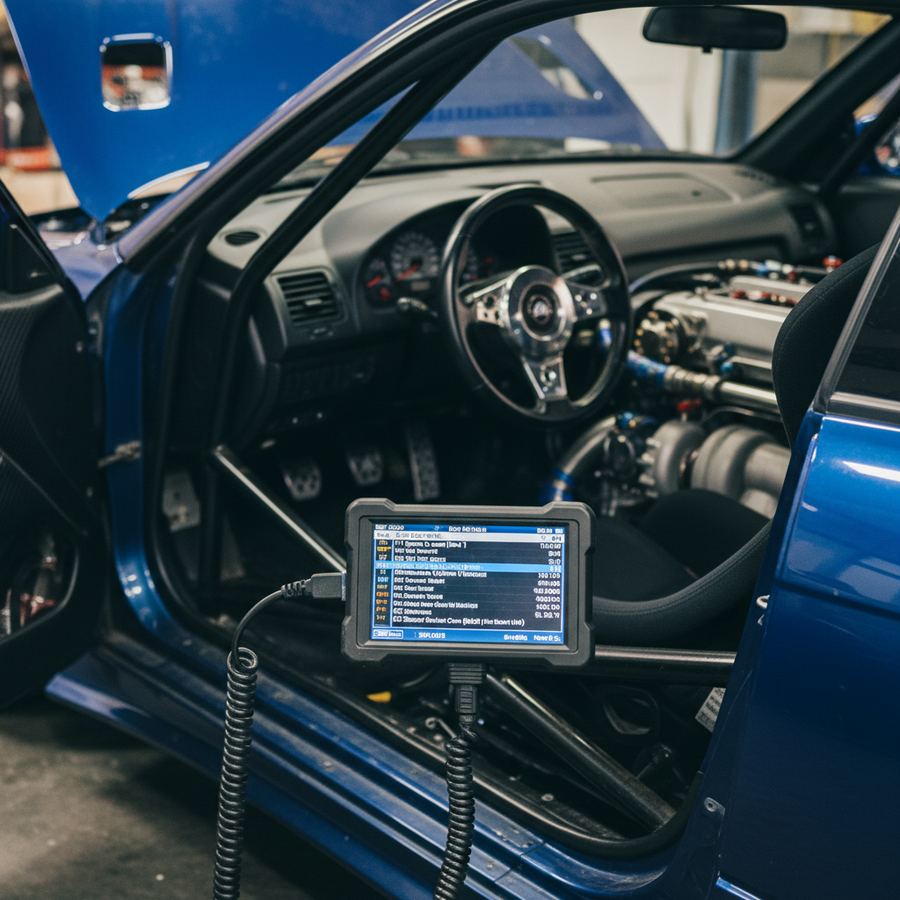
The check engine light comes on. You plug in a code reader, see P0420 (catalyst efficiency below threshold), clear it, and move on. Two days later it comes back. You clear it again. This cycle repeats until you either ignore the light permanently or tape over it. This is how most modified car owners handle diagnostics, and it is a terrible approach that eventually costs real money.
Modified cars create a unique diagnostic challenge. Some codes are expected consequences of modifications. Others are genuine failures that the modifications may have caused or accelerated. Telling the difference requires understanding what the codes mean, why the car is throwing them, and whether the underlying issue matters.
When Mods Cause CELs That Actually Matter
Not every code on a modified car is harmless. Here are the situations where a code triggered by a modification is telling you something important:
Lean codes at idle or cruise (P0171, P0174). If you installed an intake or intercooler piping and now have lean codes, you probably have a boost leak or vacuum leak at a coupling. The MAF sensor is reading one airflow value but the actual airflow past the sensor is different because air is escaping before it reaches the cylinders. This is not cosmetic. A lean condition at idle stresses the catalytic converter and can cause driveability issues. At higher loads, it can contribute to knock.
Misfire codes (P0300-P0312). Misfires after installing coils, plugs, or doing any work near the ignition system could be a loose connector, wrong plug gap, or wrong heat range. But misfires after a tune change can also indicate the tune is asking for more timing than the combustion can sustain at that operating point, causing the flame front to extinguish. Persistent misfires dump raw fuel into the exhaust, destroy catalytic converters, and wash oil off the cylinder walls.
Boost control codes (P0234, P0299). Overboost and underboost codes after installing a turbo-back exhaust, downpipe, or boost controller are telling you the ECU cannot maintain its boost target. This might mean the wastegate needs recalibration in the tune, the boost controller is not set correctly, or you have a mechanical issue with the wastegate actuator. Running uncontrolled boost is how you bend rods.
Fuel system codes (P0087, P0191). Low fuel pressure codes on a car with a tune and increased power demands are a serious red flag. This means the fuel system cannot keep up with the engine's fuel demand. Clearing this code and continuing to drive hard is a fast path to lean detonation and engine failure.
Codes You Can Safely Manage
Some codes on modified cars are expected and genuinely harmless:
Catalyst efficiency codes (P0420, P0421). If you installed a catless downpipe or high-flow catalytic converter, the rear O2 sensor will eventually trigger this code. The engine does not use the rear O2 for fueling on most platforms (it is a catalyst monitor only). A proper tune should disable this monitor. If your tuner did not, it is an oversight in the tune, not a car problem.
Evaporative emission codes (P0441, P0455, etc.). Some modifications to the intake or valve cover can affect the EVAP system routing. These codes relate to emissions vapor recovery and do not affect engine performance or longevity. However, a large EVAP leak code can sometimes indicate a gas cap that was left loose, which is worth checking before you dismiss it.
Secondary air injection codes. If the secondary air system was removed or blocked as part of a modification (common on Subaru, BMW), these codes are expected and should be disabled in the tune.
When a Tuner Broke Something vs When the Car Has a Real Problem
This is the conversation nobody wants to have. Your tuner flashed a new map, and now you have a problem. Is it the tune's fault, or did the tune expose a pre-existing issue?
The tune did it if: The problem appeared immediately after the flash. The car ran perfectly before and now has a specific, consistent issue like a rough idle, a hesitation at a certain RPM, a boost spike, or a new code. These are calibration issues that the tuner needs to address with a revision. A good tuner will fix these without argument.
The car has a real problem if: The issue is intermittent and not tied to the tune change. A random misfire that happens at different RPMs and load points. An oil pressure warning that appears under hard cornering. A coolant temp that slowly climbs higher than it used to. These are hardware issues that the tune did not cause, though the tune may have made them more apparent by increasing the load on the engine.
The gray area: Sometimes a tune reveals a weakness that was always there. A fuel pump that was marginal at stock power fails at higher power demands. An ignition coil that was on its way out starts misfiring when the tune asks for more timing. The tune did not break these parts, but it did push them past their limit. The fix is to replace the failing hardware and then validate the tune.
Why Real Diagnostics Matter
Clearing a code is not diagnosing a problem. It is erasing the evidence. The code exists because a sensor measured something outside its expected range. Clearing it without understanding why it triggered means you are choosing to not know what is wrong with your car.
Modified cars need more diagnostic attention than stock cars, not less. The modifications change the operating parameters that the ECU was calibrated for. Even with a good tune, there are more variables in play and more potential failure points. A loose clamp on a silicone coupler, a vacuum line that got knocked off during installation, or an electrical connector that was not fully seated can all cause issues that present as tune problems but are actually mechanical.
A shop with proper diagnostics capability can distinguish between tune-related issues and actual hardware failures. This matters because the fix is completely different. A tune-related issue goes back to the tuner for a revision. A hardware failure needs parts and labor. Treating one as the other wastes time and money.
The Diagnostic Process for Modified Cars
When something seems wrong with a modified car, here is a systematic approach:
Pull the codes but do not clear them yet. Read all stored codes and all pending codes. Note the freeze frame data if your scanner provides it, as this tells you what conditions existed when the code set. Write down every code, even the ones you think are from modifications.
Pull a datalog. If the car is safe to drive, log the relevant parameters during conditions that reproduce the problem. If the issue is a rough idle, log at idle. If it is a hesitation under boost, log a full-throttle pull. The log will show you what the ECU is seeing in real time, which is far more informative than a stored code.
Compare to your baseline. If you have been logging regularly (and you should be), compare the current log to a known-good log from when the car was running well. Look for differences in AFR, timing, knock retard, fuel trims, and boost behavior. The deviation from baseline tells you what changed.
Check the simple stuff. Before assuming the tune is bad or the engine is damaged, check for loose connections, boost leaks (a smoke test is fast and cheap), vacuum line routing, and proper ground connections. A shocking number of "tune problems" turn out to be a hose clamp that was not tightened after an intercooler install.
Separate tune issues from hardware issues. If the problem is consistent and repeatable at a specific operating condition, it is probably a calibration issue. If it is intermittent and appears under varying conditions, it is probably hardware. If it correlates with temperature (gets worse as the engine heats up), it could be either, but hardware becomes more suspect.
Shops using diagnostic workflow tools can document findings systematically. This is especially valuable for modified cars where the diagnostic history often spans multiple shops, tuners, and modification stages. Having a documented record of what was checked, what was found, and what was done prevents the same diagnostic work from being repeated every time the car goes to a new shop.
Stop Clearing Codes and Start Understanding Them
Your car's diagnostic system is trying to tell you something. On a modified car, the signal-to-noise ratio is worse than stock because some of those codes are expected byproducts of the modifications. But buried in that noise can be a code that is telling you about a real problem that will get expensive if you keep ignoring it.
The discipline of actually diagnosing codes instead of clearing them is what separates a modified car that runs reliably for years from one that is constantly fighting problems. Log your car, understand what the codes mean in the context of your specific modifications and tune, and fix the things that actually need fixing. Ignore the rest deliberately and with understanding, not out of laziness.
A modified car is a system. Every change affects other components. Treating it with the diagnostic rigor it deserves is how you keep it on the road and out of the shop.