Keeping a Tuned Car Reliable
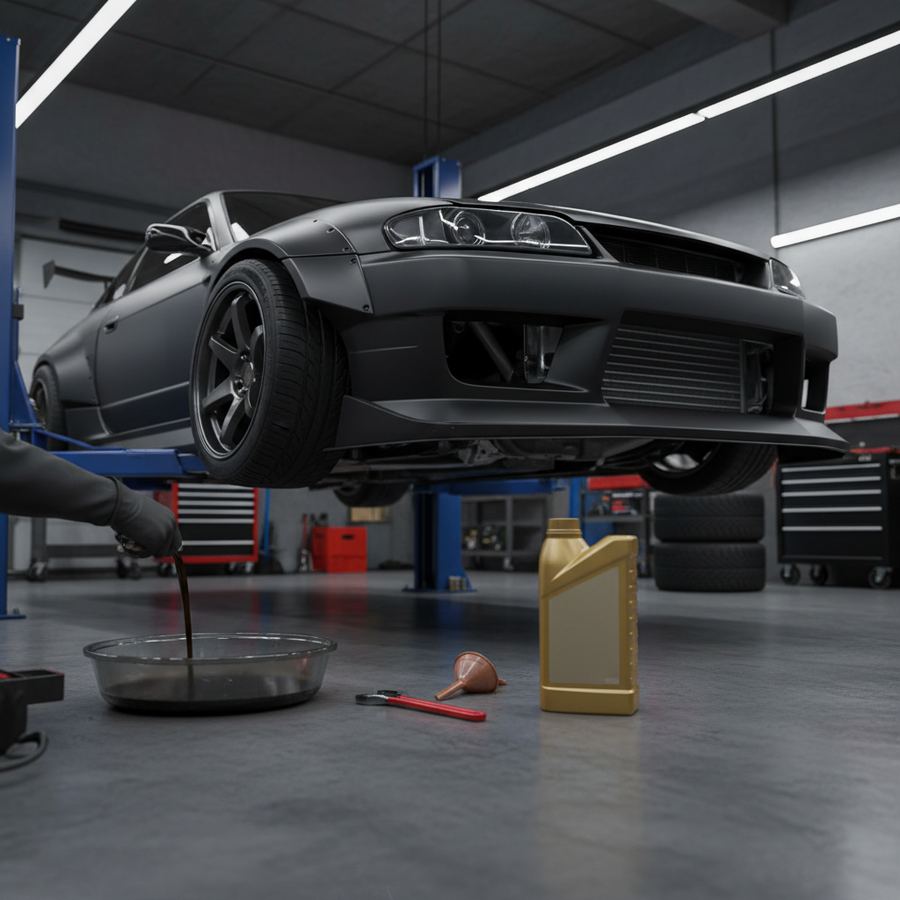
There is a certain type of car guy who will spend $4,000 on a turbo kit and then run the same oil for 8,000 miles. He will build 400 horsepower and then argue that the factory maintenance schedule still applies. This is how engines end up on Craigslist with the listing "ran when parked."
Modifying an engine changes the demands on every fluid, filter, and wear item in the car. More power means more heat, more combustion pressure, more stress on internals. The maintenance schedule has to change with it. If you want a tuned car that lasts years instead of months, this is where that starts.
Oil Changes: The Single Most Important Thing
Factory oil change intervals are designed for stock engines running stock boost on pump gas with stock heat output. The moment you turn up the boost, run an aggressive timing map, or add a bigger turbo, those intervals are too long.
For a mildly tuned turbocharged car, 3,000 to 4,000 miles is a reasonable oil change interval. For anything pushing serious power or running E85, cut that to 3,000 or less. The oil is doing more work in a tuned engine. It is dealing with higher cylinder temperatures, more blowby, and often higher oil temps.
Run a quality full synthetic. Most tuners recommend 5W-30 or 5W-40 depending on the platform. If you are not sure, ask your tuner. They know what oil temp and pressure numbers look like on your setup and can recommend the right weight.
Oil analysis is worth the $30 it costs. Send a sample to Blackstone Labs every other oil change. They will tell you if you are seeing bearing wear, fuel dilution, or coolant contamination before it becomes a real problem. Think of it as a blood test for your engine.
Coolant: Do Not Neglect It
Coolant degrades over time. The corrosion inhibitors break down, the pH changes, and its ability to transfer heat drops. In a stock car, the factory interval is fine. In a tuned car that runs hotter, the coolant is working harder and should be changed more often.
Every two years or 30,000 miles is a good baseline for modified cars. Use the correct spec for your platform. Mixing coolant types or running straight water without a corrosion inhibitor will cause problems that show up slowly and cost a lot to fix. If you are running a cooling system upgrade, fresh coolant should be part of that install.
Check your coolant level regularly. Tuned cars that see occasional hard driving can develop small leaks at hose clamps or the water pump over time. Catching a slow coolant loss early is a lot cheaper than catching it when the temp gauge is buried.
Transmission Fluid: The Forgotten Maintenance Item
More power means more stress on the transmission. Whether you are running an automatic or a manual, the fluid matters more than most people think.
Manual transmissions in tuned cars benefit from fluid changes every 30,000 to 40,000 miles. Hard shifting, grinding synchros, or notchy engagement are often just old fluid. A fresh fill of the correct spec fluid can make the gearbox feel brand new.
Automatics and DCTs are more sensitive. If your car makes significantly more torque than stock, the transmission fluid temperature goes up. Higher fluid temps break down the fluid faster. If your platform supports it, adding a transmission cooler and shortening the fluid interval to 30,000 miles will save the transmission long-term. This is especially true on cars where the automatic is already a known weak point at stock power.
Spark Plugs: Smaller Gap, Shorter Life
Tuned cars are harder on spark plugs. Higher cylinder pressures make it harder for the spark to jump the gap, and most tuners will gap the plugs tighter than stock to compensate. That tighter gap wears out faster.
On a boosted, tuned engine, check or replace spark plugs every 15,000 to 20,000 miles. Some platforms need them sooner. If you are running high boost on pump gas, the plugs are doing serious work, and a worn plug can cause misfires that the knock sensors pick up as detonation. The ECU pulls timing, you lose power, and the problem snowballs.
Always run the plug brand, heat range, and gap that your tuner specifies. Going one heat range colder is common on tuned cars and prevents the plug tip from getting hot enough to cause pre-ignition. Do not experiment with this unless you are datalogging and know what to look for.
Fuel System Maintenance
The fuel system does not get much attention until something goes wrong. On a stock car, that is usually fine. On a tuned car, a dirty fuel filter or failing fuel pump can cause a lean condition that cracks a ringland or melts a piston.
Replace the fuel filter at the manufacturer interval or sooner. If your car has an in-tank pump and a separate inline filter, do not skip the inline filter just because it is harder to reach. On E85 cars, the fuel filter can clog faster because ethanol is a solvent that loosens deposits in the tank and fuel lines.
Fuel injectors on most modern cars do not need cleaning if you are running quality fuel. But if you notice a cylinder running lean in your datalogs, or you see a misfire code on one specific cylinder, a clogged injector is worth investigating before you blame the tune.
If your build uses an aftermarket fuel pump, listen to it. A pump that is getting louder or whining more than it used to is telling you something. Fuel pumps do not last forever, and on a car that needs every bit of fuel delivery the system can provide, a weak pump is a ticking clock.
Differential Fluid
This one gets skipped constantly. The rear differential on a rear-wheel-drive or all-wheel-drive car takes more abuse with more power. Hard launches, aggressive driving, and higher torque loads all cook the diff fluid faster.
Change the differential fluid every 30,000 to 40,000 miles on a tuned car. Use the correct spec. Limited-slip differentials often require a friction modifier additive. Skip it and you will hear chattering on tight turns. It is cheap insurance for an expensive part.
The Maintenance Mindset
The pattern here is simple. Everything that wears out on a stock car wears out faster on a tuned car. Fluids break down sooner. Wear items wear sooner. Filters clog sooner. The solution is not complicated. Shorten your intervals, use quality parts and fluids, and actually do the work on schedule.
There is no mod you can buy that replaces consistent maintenance. A well-maintained 300 horsepower car will outlast a neglected 500 horsepower car every single time. The guys who keep modified cars running for 150,000 miles or more are not lucky. They just do the boring stuff on time.
Keep a maintenance log. Write down mileage, what you did, and what fluids you used. When it comes time to sell the car or diagnose a problem, that log is worth its weight in gold. It is the difference between "I think the oil was changed recently" and knowing exactly what has been done and when.
Build power. But maintain what you have built. That is how reliable modified cars actually happen.