Cooling Upgrades That Actually Matter
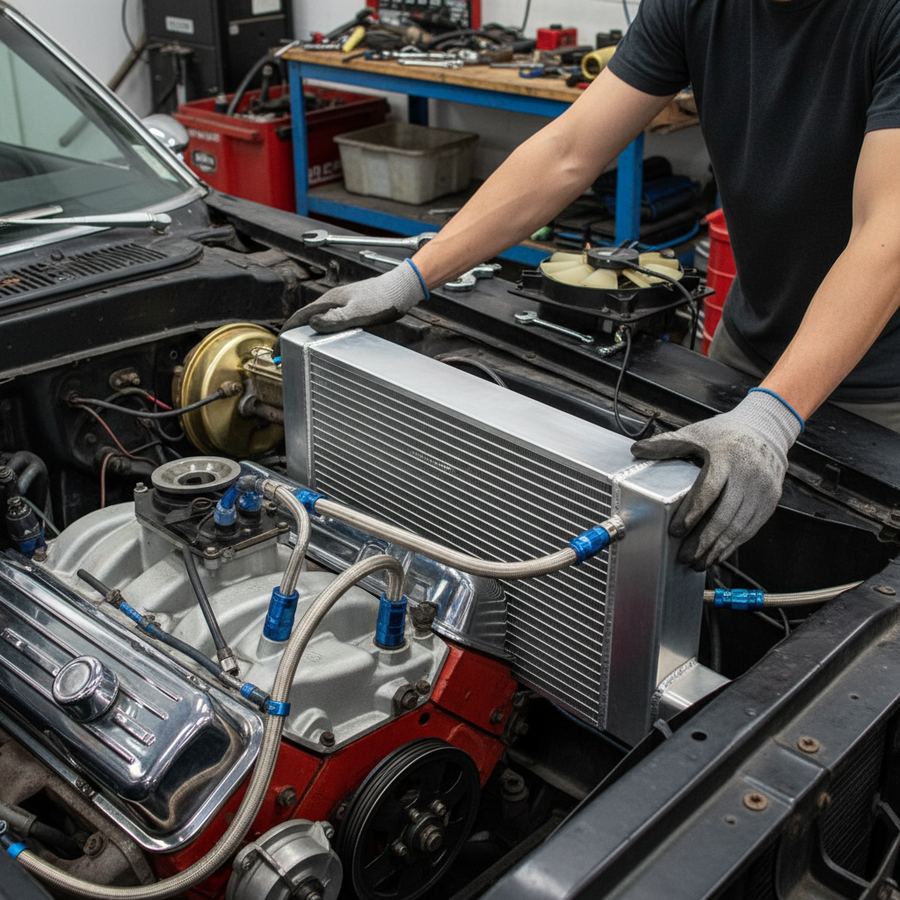
Heat is the thing that kills tuned engines. Not the power itself, not the boost, not the aggressive timing. It is the heat those things create when the cooling system cannot keep up. Every tuned car reaches a point where the stock cooling system is no longer enough, and knowing which upgrades actually solve the problem is worth understanding before you get there.
Why Heat Matters More on Tuned Cars
A stock engine is designed to operate within a specific thermal window. The factory cooling system is sized to keep it there under normal driving conditions with some margin built in. When you increase power, you increase the heat the engine produces. More fuel burned per cycle means more thermal energy in the coolant, the oil, and the intake charge.
On a mildly tuned naturally aspirated car, the stock cooling system is usually fine. But once you start adding forced induction, raising boost pressure, or running aggressive timing on a turbocharged car, you start eating into that thermal margin fast. When the cooling system runs out of headroom, coolant temps climb, oil temps follow, and the engine starts pulling timing to protect itself. You lose the power you paid for, and if the temps keep climbing, you lose the engine.
This is why datalogging coolant and oil temperature is so important on tuned cars. The numbers tell you when you are approaching the edge long before the dashboard gauge moves.
Radiator Upgrades
The radiator is the primary heat exchanger for the engine. A stock radiator on most modern cars is a single-row or thin dual-row aluminum and plastic unit. It works fine at stock power but has limited capacity for anything beyond that.
Aftermarket performance radiators are typically full aluminum, dual or triple row, with more fin density and better core thickness. A good aluminum radiator swap can drop coolant temps 10 to 20 degrees on a tuned car, sometimes more in stop-and-go traffic where airflow is low and heat soak is the real problem.
When shopping for a radiator, core thickness matters more than row count. A thick dual-row core with good fin density will outperform a thin triple-row core. End tank design matters too. Full aluminum end tanks are stronger than plastic, which is relevant if you are running higher coolant system pressure from a higher-rated radiator cap.
The radiator swap is one of the most cost-effective cooling upgrades you can do. On most platforms it is a direct bolt-in with no fabrication needed. If your tuned car sees spirited driving, track days, or hot-climate summers, this should be one of the first things you address.
Oil Coolers
Oil temperature is just as important as coolant temperature, and on many tuned cars it is actually the bigger problem. Oil starts losing its protective properties above 250 to 260 degrees Fahrenheit. On a boosted car running hard, oil temps can climb past that range quickly, especially if the car is also running higher coolant temps that reduce the oil cooler's effectiveness through the factory oil-to-coolant heat exchanger.
There are two types of oil coolers: oil-to-coolant and oil-to-air. Most factory setups use an oil-to-coolant exchanger, which means the oil can only get as cool as the coolant allows. An aftermarket oil-to-air cooler with its own dedicated core and airflow can bring oil temps down independently of the coolant system.
If you add an oil cooler, use a thermostat sandwich plate so the oil reaches operating temperature before flowing through the cooler. Running oil that is too cold is almost as bad as running it too hot. Cold oil is thick, does not flow well into tight clearances, and creates more parasitic drag. A thermostat that opens around 180 to 200 degrees is standard for most setups.
Oil cooler line routing matters. Keep the lines away from exhaust components. Use quality AN fittings and braided stainless lines. A blown oil cooler line at full boost will empty your oil pan in under a minute, and that is a story that ends badly.
Intercoolers
On forced induction cars, the intercooler is the single most important cooling component for making consistent power. Its job is to cool the intake charge after the turbo or supercharger compresses it. Compressed air is hot air, and hot air is less dense, which means less oxygen per cylinder fill, which means less power.
Stock intercoolers on most factory turbo cars are undersized for anything beyond stock boost levels. They heat soak quickly under repeated pulls, and intake air temps climb pull after pull until the ECU starts pulling timing. If you have ever noticed your car feeling slower on the third or fourth pull than the first, that is heat soak.
A larger front-mount intercooler with more core volume and better end tank design will keep intake temps stable across multiple pulls. The drop in intake air temps from a good intercooler upgrade can be 30 to 50 degrees over stock, which translates directly into more consistent power and safer tuning margins.
There is a tradeoff with larger intercoolers: lag. A bigger core has more volume that needs to be pressurized, which can add a small amount of turbo lag. On a street car, this is usually negligible and well worth the thermal benefit. On a competition car where every tenth of a second in spool-up matters, core sizing becomes more of a balancing act.
Top-mount versus front-mount is a platform-specific decision. Front-mounts get better airflow but require longer piping. Top-mounts are compact but sit in the engine bay where heat soak from the engine is a factor. Most serious builds end up front-mounted for the thermal advantages.
Thermostat Choices
The thermostat controls when coolant starts flowing through the radiator. Stock thermostats on most cars open around 190 to 200 degrees. A lower-temp thermostat, typically 160 to 170 degrees, will send coolant to the radiator sooner and keep overall temps lower.
This sounds like a no-brainer, but there are caveats. Running a cooler thermostat means the engine takes longer to reach operating temperature, especially in cold climates. A cooler-running engine can have slightly worse fuel atomization and oil flow until everything is up to temp. On most modern cars with closed-loop fuel management, this is a minor issue. But it is worth knowing about.
The bigger benefit of a lower thermostat is headroom. If your stock thermostat opens at 195 and your car starts pulling timing at 220, you have 25 degrees of margin. Drop the thermostat to 170 and you have 50 degrees. That extra margin keeps you safe during hard driving, hot days, and stop-and-go traffic after a spirited run.
Some tuners will adjust the fan activation temperature in the tune to match the lower thermostat, which further helps keep temps in check. If you swap to a lower thermostat, ask your tuner if they can adjust the fan table to match.
What Does Not Help
Not every cooling product is worth the money. Here is what to skip.
Coolant additives that claim to drop temps by 20 degrees are mostly marketing. Water Wetter and similar products can help marginally in specific situations, but they are not a substitute for actual hardware upgrades. If your cooling system cannot keep up, an additive will not fix it.
Underdrive pulleys slow the water pump, which reduces coolant flow. Some underdrive kits are fine because they only affect the alternator and AC, but if the kit slows the water pump, you are trading a small power gain for worse cooling. On a tuned car that already runs warm, that is a bad trade.
Electric water pump conversions are popular in the racing world but are overkill for most street builds. They add complexity, require a controller, and the stock mechanical pump is more than adequate for street driving when paired with a proper radiator upgrade.
A Cooling Strategy That Works
For most tuned street cars, the priority list looks like this: radiator first, then intercooler if you are boosted, then oil cooler if datalogs show oil temps climbing above 240 on spirited drives, and a lower thermostat as a simple supporting mod at any point.
Every one of these upgrades supports the maintenance schedule that keeps a tuned car alive. Cooler-running fluids last longer, cooler engines wear less, and cooler intake charges make consistent power pull after pull. Heat is the real enemy. These are the tools that fight it.
If you are not sure where your temps actually sit, start with datalogging before you buy anything. The data will tell you exactly where your cooling weak points are, and you can spend your money on the upgrade that will actually make a difference instead of guessing.